
1. Challenges in Managing Massive Unstructured Data
In the age of AI, video streaming, and IoT, over 80% of data generated is unstructured (images, videos, logs, backups). Traditional storage like NAS or SAN uses hierarchical directory structures that suffer performance drops as data scales to the PB level. Moreover, physical disk arrays have limits, requiring expensive hardware additions and risky data migrations when space runs out.
2. Revolutionary Mechanism of Cloud Object Storage
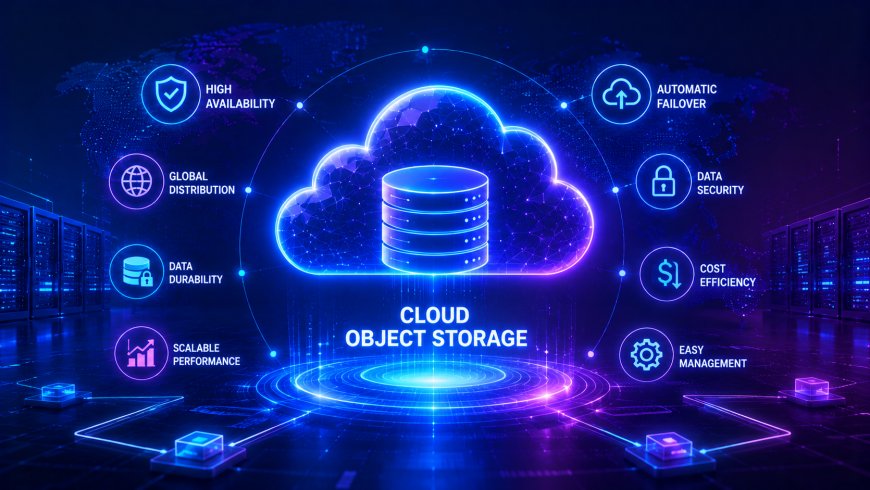
Object Storage discards the folder concept for a "flat" architecture. Each piece of data is encapsulated as an "Object," containing the payload, custom metadata, and a unique identifier (URL). This brings several advantages:
- Virtually Infinite Scalability: No physical capacity limits. Enterprises can store billions of files without worrying about backend load balancing.
- Extreme Durability: Providers automatically replicate objects across multiple data centers (Availability Zones), achieving 99.999999999% (11 nines) durability.
- RESTful API Friendly: Developers can access data via simple HTTP requests (GET, PUT, DELETE), perfect for modern web and serverless integrations.
3. Smart Storage Tiering Strategy
Not all data needs high-speed access all the time. Cloud vendors offer fine-grained tiering to balance performance and cost:
- Standard Tier: Lowest latency for frequently accessed data like website assets or media libraries (e.g., AWS S3 Standard).
- Infrequent Access Tier: Lower storage cost but higher access fees, ideal for disaster recovery backups or audit logs (Warm Data).
- Archive/Cold Tier: Extremely low cost for long-term retention of compliance data. Retrieval can take minutes to hours (e.g., S3 Glacier Deep Archive).
4. Lifecycle and Security Consultancy Value
Wang Cloud helps set up "Lifecycle Management" rules, automatically moving data between tiers to minimize costs (e.g., moving logs to archive after 1 year). We enforce encryption at rest and in transit, combined with strict IAM roles and "Object Lock" to protect your assets from ransomware and unauthorized tampering.